

Trust is the entire product in pre-owned watches. Everything else is detail.
1. Why Authentication Is the Real Value of a Marketplace
When a collector buys a $20,000 Rolex Daytona on a peer-to-peer platform, they are not really buying a watch. They are buying confidence — confidence that the dial is original, the movement matches the case, the serial number traces back to the year the seller claims, and that the platform stands behind every assertion in the listing. Strip that confidence away and the same watch is worth a fraction of its asking price, regardless of how it photographs.
This is why the secondary watch market — now estimated at over $27 billion globally and growing 10 to 12 percent annually — has reorganized itself around verification rather than inventory. The platforms winning the most volume are not the ones with the largest catalogs. They are the ones with the most credible authentication infrastructure.
This guide is the foundational reference for how authentication actually works in 2026. It covers what counterfeiters target, how authentic watches reveal themselves, what paperwork actually proves, and why platform-level controls matter as much as a single expert's eye. Use it as the hub for everything from identifying frankenwatches to decoding serial numbers to why only one submission in ten makes it to auction.
2. The Four Pillars of Watch Authentication
Every credible authentication framework — whether run by a major auction house, an independent specialist, or an algorithmic platform — checks the same four pillars. A watch that passes all four is almost certainly authentic. A watch that fails on even one warrants escalation.
Pillar 1: Visual Authentication
This is the layer most buyers think of first. It covers everything a trained eye can see in high-resolution photographs: dial printing, font sharpness, lume application, hand proportions, indices alignment, bezel insert color, case edge geometry, and crown profile. Modern AI vision systems excel here, comparing submitted photographs against thousands of verified reference images at the pixel level.
The visual layer catches the majority of counterfeits — but not the most sophisticated ones. Super fakes are specifically engineered to defeat visual checks, which is why no serious authentication framework relies on this pillar alone.
Pillar 2: Mechanical Authentication
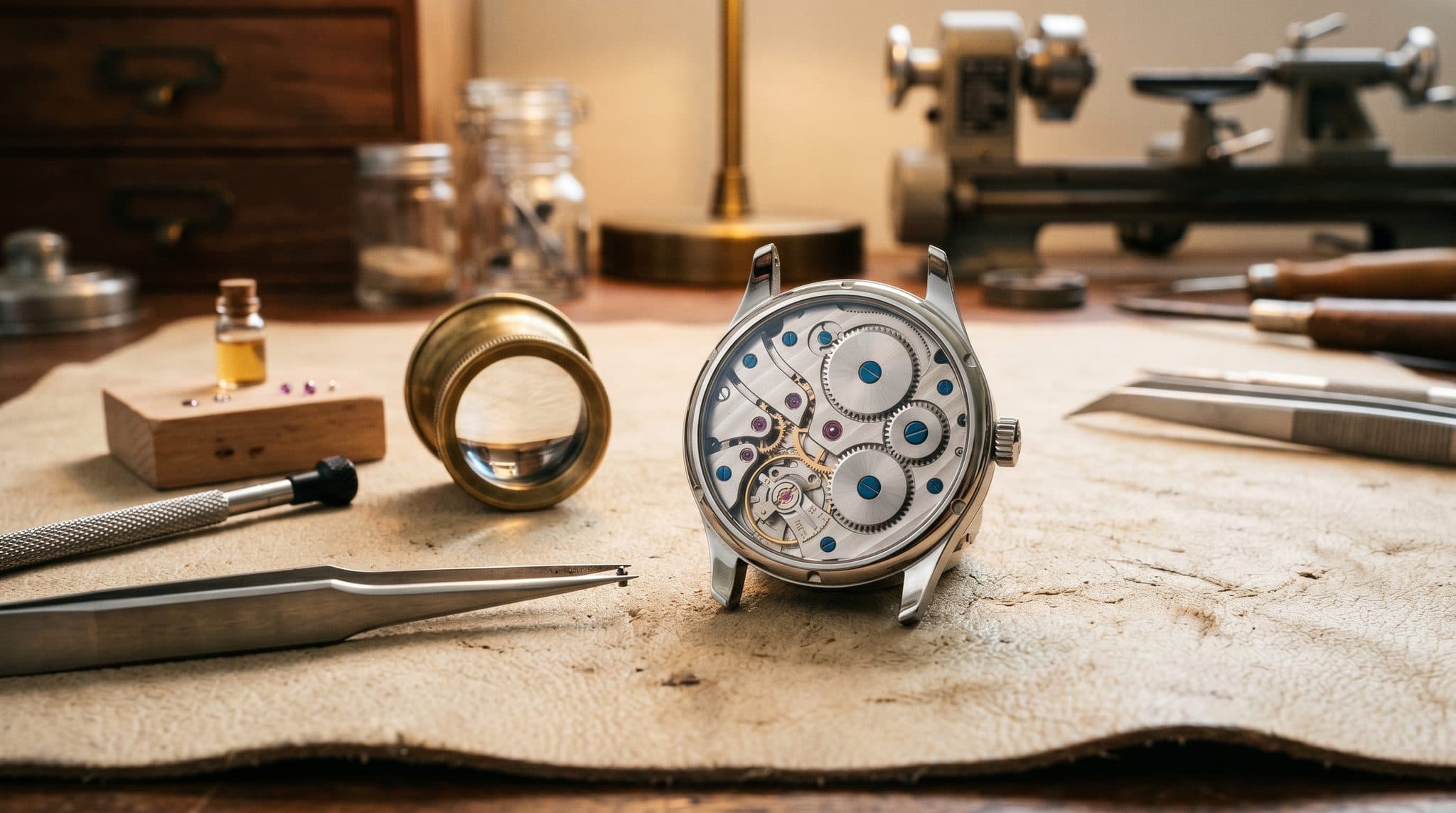
The second pillar examines the movement: caliber number, finishing quality, rotor signature, jewel count, screw heads, regulator design, and bridge layout. Authentic luxury movements are finished to standards that counterfeit movements cannot match, even when the case and dial appear correct. A watchmaker opening the caseback can confirm authenticity within minutes.
The complication: most marketplace listings cannot show the movement. Sellers are reluctant to crack open a case for photographs, and platforms cannot mandate it. This is why mechanical authentication is typically reserved for high-value submissions, third-party authentication services, and post-sale buyer protection workflows.
Pillar 3: Paper and Provenance
Original boxes, warranty cards, service records, and ownership history form the paper trail. A complete set with matching serial numbers and a verifiable purchase history adds material value — typically 5 to 15 percent — and dramatically strengthens authentication. Read our dedicated breakdown of how much box and papers actually add to a watch's value.
But papers can be forged, and they can be paired with the wrong watch. A genuine warranty card stapled to a counterfeit timepiece is a known fraud pattern. Papers help authenticate, but they never authenticate alone.
Pillar 4: Platform Controls and Procedural Trust
The fourth pillar is the one most buyers overlook: the policies and procedures of the platform itself. This includes seller verification, escrow settlement, insurance, return rights, dispute processes, and the willingness of the platform to absorb losses when authentication fails. A watch listed on a platform with strong controls is materially more trustworthy than the same watch listed in a forum or classified ad — even before any expert has examined it.
This pillar is the reason peer-to-peer marketplaces have eclipsed forum sales for serious collectors. The watch may be identical. The trust infrastructure is not.
3. The Counterfeit Landscape: What You Are Actually Up Against
Understanding the threat is essential to understanding the response. Counterfeit watches in 2026 fall into four tiers, each requiring different authentication strategies.
| Tier | Description | Detection Difficulty | Typical Source |
|---|---|---|---|
| Tier 1 | Obvious replicas with wrong fonts, weight, and finishing | Trivial | Tourist markets, low-tier online sellers |
| Tier 2 | Mid-tier replicas with correct silhouette but soft details | Easy with reference images | Mid-tier online replica vendors |
| Tier 3 | High-quality counterfeits with cloned movements | Difficult — requires expert inspection | Specialized counterfeit operations |
| Tier 4 | "Super fakes" — purpose-built to defeat authentication | Extreme — sometimes requires destructive testing | Sophisticated criminal networks |
Tier 1 and 2 counterfeits are caught easily by any modest authentication process. Tier 3 fakes require trained human eyes or reference-comparison AI. Tier 4 super fakes are the genuine concern of modern marketplaces, and they are the reason multi-pillar authentication exists. Read our deeper analysis of super fakes and how the industry is responding.
Beyond outright counterfeits, the larger volume problem is the frankenwatch — a watch built from a mix of authentic and aftermarket parts. Frankenwatches are technically harder to detect than full counterfeits because every individual component may be genuine, even if the combination is not.
4. How AI Authentication Changed the Game
The single largest shift in pre-owned watch authentication over the past three years has been the operationalization of AI-powered visual verification. The pipeline used at Grey Market — and increasingly across the industry — runs photographs through a sequence of specialized models: identification of brand and reference, generation of a target specification sheet, retrieval of comparable verified images, parallel "witness" checks against authenticity criteria, and synthesis of a confidence-scored verdict.
The effect is dramatic. What used to take a human authenticator hours of comparison work now produces a structured report in minutes, with consistent criteria applied across every submission. AI does not replace human expertise — it scales it. For the full mechanics of how this works, including where the technology excels and where humans still own the final call, read Watch Valuation: AI vs. Human.
5. The Buyer's Authentication Checklist
Before placing a serious bid or making a high-value purchase on any platform, work through this checklist. It will catch the vast majority of authentication issues before they cost you.
- Confirm the platform's authentication policy. Is verification mandatory or optional? Who performs it? What recourse do you have if a watch turns out to be inauthentic after settlement?
- Verify the reference number. Match the seller's stated reference to the dial, caseback, and movement details. Use brand archives or trusted reference databases.
- Check the serial number. Run the serial against known production records to confirm the year and case batch. Our serial number tutorial walks through this for the major brands.
- Examine dial details. Compare every printed element — text, lume application, indices, sub-dial layouts — to authenticated reference photographs. Counterfeits almost always reveal themselves on the dial.
- Inspect for franken indicators. Are the hands, dial, and movement all correct for the production year? Mismatched eras are the most common franken signal.
- Review the paper trail. Do warranty card serials match the watch? Are service stamps from authorized centers? Is there continuity of ownership?
- Cross-check with sold comparables. If the price is dramatically below market for the reference and condition, that itself is an authentication signal — usually a warning.
6. The Seller's Authentication Responsibilities
Sellers who treat authentication as the buyer's problem ultimately get lower prices and longer time-to-sale. The sellers who consistently realize 95 to 100 percent of market value treat authentication as the first thing they offer, not the last. That means:
- Photographing every required angle in high resolution before the listing goes live
- Disclosing service history, replacement parts, and any known modifications upfront
- Submitting the watch to platform authentication or a third-party service before listing
- Keeping original boxes, papers, and receipts even when they seem trivial
For the complete seller-side framework, see our Ultimate Guide to Selling Your Luxury Watch Online and the dedicated piece on how to photograph a watch for sale.
7. Cluster Reading: The Complete Authentication Library
This hub is a starting point. The articles below cover each authentication subtopic in detail.
- What Is a Frankenwatch? — How partial-authenticity watches are built, sold, and detected.
- How to Check a Watch's Serial Number — The practical tutorial for Rolex, Omega, Patek, AP, and Tudor.
- Visual Guide to Authentic Rolex Dials — A reference of the printing, lume, and font tells across major Rolex eras.
- The Truth About Super Fakes — Why the latest generation of counterfeits is forcing the industry to evolve.
- How to Tell If a Rolex Is Real — The checks a buyer can still run without tools, in order, and the one that actually decides.
- Why Only One Watch in Ten Makes It to Auction: what we turn down at submission, and why.
8. The Bottom Line
Authentication is not a step in the buying or selling process. It is the buying and selling process. Every dollar of value in a pre-owned luxury watch flows through the question of whether the buyer can trust what they are buying. Platforms that take this seriously win. Platforms that treat it as an afterthought lose — slowly at first, then suddenly.
If you are buying, demand authentication and never compromise on it for a discount. If you are selling, make authentication the first thing your listing offers. And if you are choosing a marketplace, look at the procedural trust infrastructure as carefully as you look at the inventory. That is the real product.