

Tudor Chronograph 79280
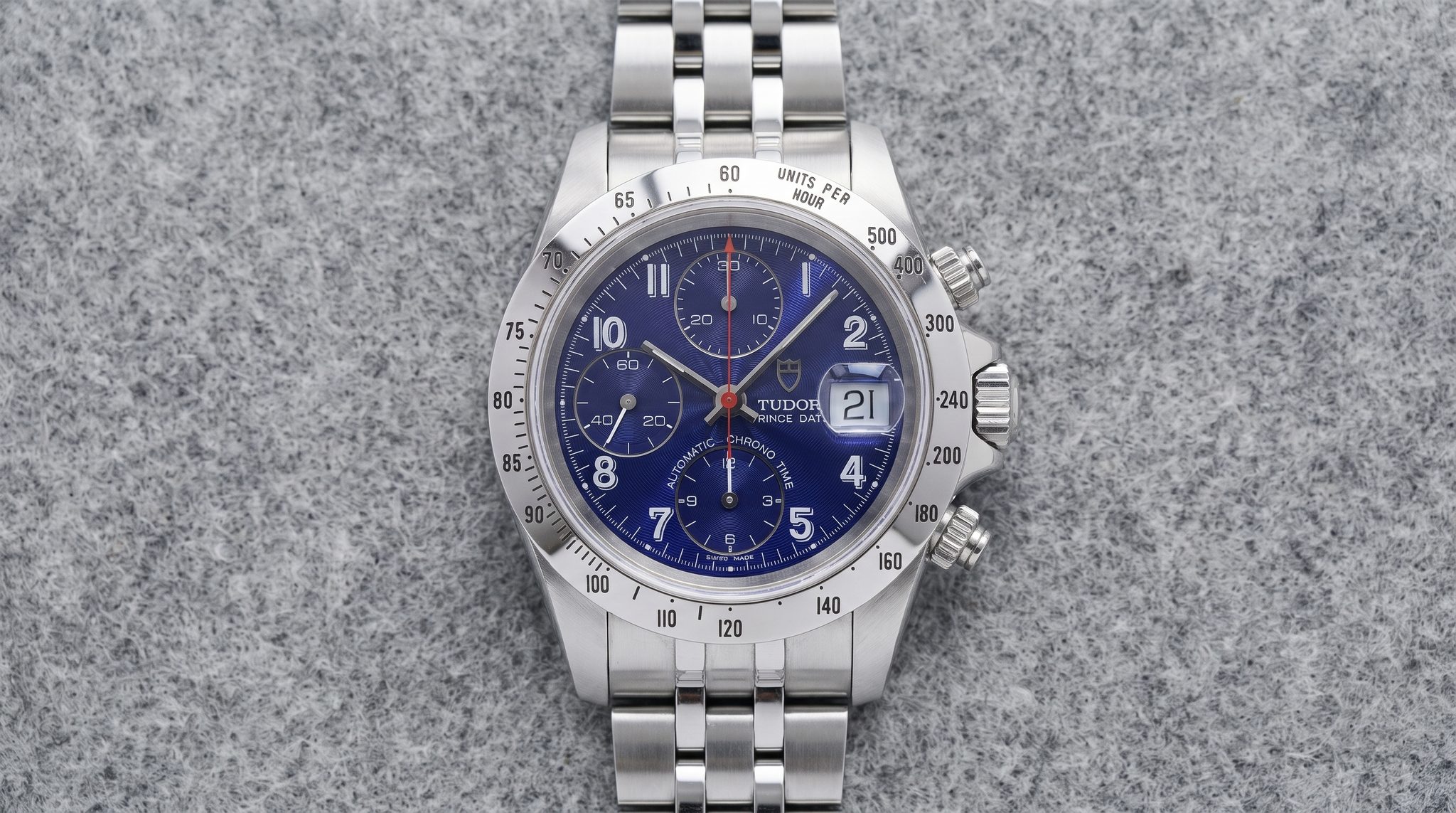
The steel-bezel Small Block chronograph whose unchanging reference number hides Tudor's slow break from Rolex parts.
- Production
- 1995–early 2000s
- Case
- Stainless steel
- Diameter
- 40 mm
- Thickness
- ~14 mm
- Bezel
- Fixed steel, engraved tachymeter
- Crystal
- Sapphire
- Movement
- Cal. 7750 (ETA/Valjoux)
- Jewels
- 25
- Power reserve
- ~40–44h
- Pushers
- Screw-down
- Crown
- Screw-down
- Lume
- Tritium
The Tudor Chronograph 79280 was produced from 1995 to the early 2000s.
- Production years
- 1995–early 2000s
- Replaced
- 79180
- Movement
- Cal. 7750 (ETA/Valjoux)
The Tudor Chronograph 79280 is the watch in which Tudor's reliance on Rolex can be seen running out within a single reference number. The digits never changed, because they encode only the bezel (the final "80" means the engraved steel tachymeter bezel), but everything around them did: early examples carry an OYSTERDATE dial and may retain a Rolex-signed crown or case back, while later ones read PRINCE DATE and generally lack Rolex-signed hardware. Tudor's own history places a 79280 in 1995, at the start of the Small Block generation that replaced the thicker Big Block 79180 with a sapphire crystal and a slimmer case, and the series was the last and most technically advanced of the Oysterdate chronographs. No single date marks the handover of parts. Collectors read it from surviving watches, which show a late-1990s stretch in which dial wording, crown and case back do not always agree. That is why the reference rewards attention to configuration over the number itself, and why a correct, coherent example is worth more than a merely clean one.
“One reference number, one bezel, and a Rolex-to-Tudor handover written across the dial, crown and case back.”
Tudor Chronograph 79280 production years: 1995–early 2000s
The 79280 arrived in 1995 as part of the Small Block generation, which Tudor's own history documents. Against the Big Block 79180 it brought a sapphire crystal in place of acrylic and a slimmer case, though Tudor's reason for the redesign is not documented in the available material. The dial wording changed from OYSTERDATE to PRINCE DATE during the late 1990s, and the Rolex-signed hardware faded out over the same stretch. Neither handover has a published cause or a universally accepted date. The range of c. 1997–2000 on the strip is therefore an approximation drawn from surviving watches, not a factory record. Bracelets moved on their own schedule: the series began on steel Oyster bracelets, a five-link Jubilee-style bracelet arrived for the chronographs around 2000, and leather straps on a Tudor deployment clasp came later in the Small Block period. The end of production is unsettled too. Tudor's overview gives 1995 to 2000, and serial guides and dealer listings run into the 2000s, with one specialist table stretching to about 2008. The discrepancy likely reflects continued sales and serial-based dating, so 2000 is not safe to treat as a hard cutoff. Within a single reference number, the dial wording, hardware, bracelet and lume all changed independently, while the bezel digits never moved.
- 1995Small Block launchEngraved steel tachymeter bezel, sapphire crystal
- 1995Oysterdate dialsRolex-signed crown or case back possible
- c. 1996 – 2000Prince Date handoverDial text; Tudor-signed crown and case back
- c. 2000Jubilee-style braceletFive-link Tudor Jubilee-style bracelet
- 2000Tudor's cited endPrince Date dials on early-2000s examples
79280 against its neighbours
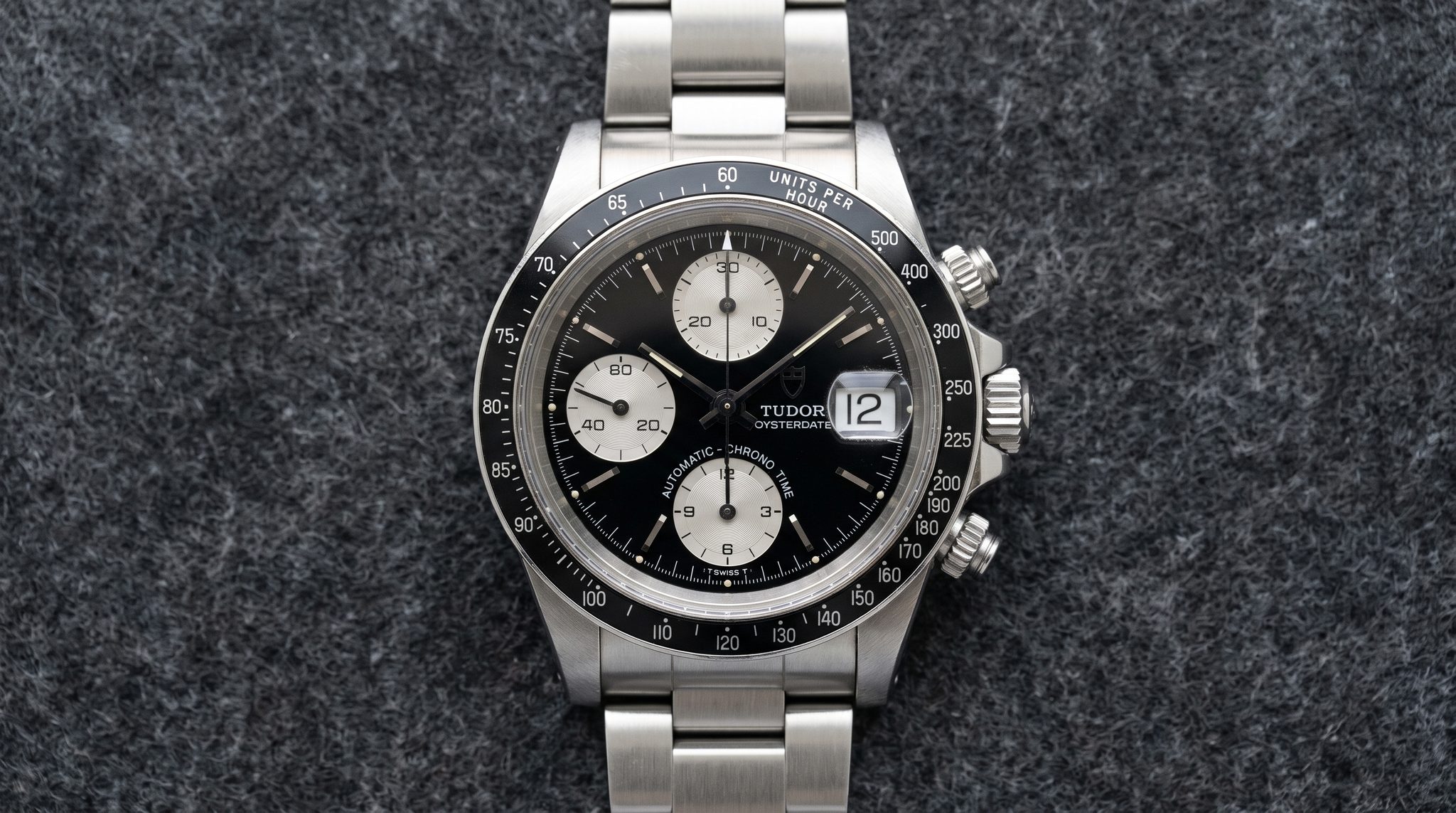
The 79180 is the Big Block predecessor that the 79280 replaced, and the 79260 and 79270 are the Small Block siblings that differ from it chiefly in the bezel. Together they show that the final two digits of the reference identify the bezel, while the era of the case shows up in the middle digits.
79180 Predecessor (Big Block) c. 1989–c. 1995 | 79270 Same-generation sibling 1995–early 2000s | This reference 79280 Tudor · focal 1995–early 2000s | ||
|---|---|---|---|---|
| Production | 1989–1995 | 1995–early 2000s | 1995–early 2000s | 1995–early 2000s |
| Case | Steel, thicker Big Block | Steel, Small Block | Steel, Small Block | Stainless steel |
| Bezel | Fixed steel tachymeter | Fixed black tachymeter insert | Rotating black 12-hour | Fixed steel, engraved tachymeter |
| Crystal | Acrylic | Sapphire | Sapphire | Sapphire |
| Movement | Valjoux 7750 | Valjoux 7750 | Valjoux 7750 | Cal. 7750 (ETA/Valjoux) |
11 dial and hardware variants across the run
The first Small Block dials read OYSTERDATE, and Tudor's own 1995 example pairs that wording with a white enamel-type dial and black counters, so it announces itself as the generation's opening look. Early examples may also retain a Rolex-signed crown or case back, but the two traits are separate observations. The word on the dial does not guarantee the hardware beneath it.
What to check before buying a 79280
The risk in buying a 79280 is coherence, not scarcity: because the reference is comparatively plentiful, buyers can afford to wait for a correct, unpolished example instead of accepting a mismatched one. Replacement dials, swapped bezels and mixed-period hardware are the usual faults, and the reference number itself guarantees none of them away. At 40 mm and roughly 14 mm thick, with substantial screw-down pushers, it is a chronograph with real wrist presence. It is also the last Oysterdate-era chronograph generation, so a correct one is a compact record of Tudor's own turn. A normal example in good condition generally sits at a mid-four-figure price.
Tudor Chronograph 79280 price and value
A Tudor Chronograph 79280 sells for about $3,200 at the median, typically $2,300 to $4,200 across 20 comparable sales.
Tudor Chronograph 79280 for sale
Indicative figures from recent dealer, auction, and Grey Market sales (updated this week). Every watch is verified before it sells here.
Each point is a recent dealer or auction sale, banded to an indicative figure. The range shown is not a valuation.
Grey Market runs watch auctions for vintage and neo-vintage pieces, every lot reviewed before it lists and verified before the seller is paid, and the Watch Exchange, where ID-verified users buy and sell at a fixed price. Selling one? See the ways to sell a Tudor, or check what it’s worth. For more vintage Tudor, see the Tudor reference guide.
Adjacent in the Chronograph family
Common questions about the 79280
The Tudor Chronograph 79280 was produced from 1995 to the early 2000s. Tudor's own overview gives 1995 to 2000, while serial guides and dealer listings run into the 2000s, and one specialist table stretches to about 2008. The siblings 79260 and 79270 are grouped over the same broad span, and the predecessor 79180 ran 1989–1995.
- TUDOR Chronograph Watches, 1995 to 2000 | Inside TUDORtudorwatch.com
- A Unique Style: The chronographs from 1976 to 1991 | Tudortudorwatch.com
- Insider: Tudor Chronograph ref. 79280. A Transitional Pandawatchcollectinglifestyle.com
Show 7 more
- Fratello's Top 5 Tudor Chronograph References Everfratellowatches.com
- Very Briefly: Tudor Chronographs (Vintage, Pricing)revolutionwatch.com
- Tudor's Half Century of Chronographswristcheck.com
- Tudor Oysterdate Prince 79280 reference indexcollectorsquare.com
- Tudor Chronograph (vintage) 79280 Specs and Reference Guideshop.sandiegojewelrybuyers.com
- Tudor Chronograph Watch Guide: All References, 1970 to Todayluxurybazaar.com
- Tudor Serial Numbers & Production Year Lookupgrymrkt.co