

Tudor Chronograph 79160
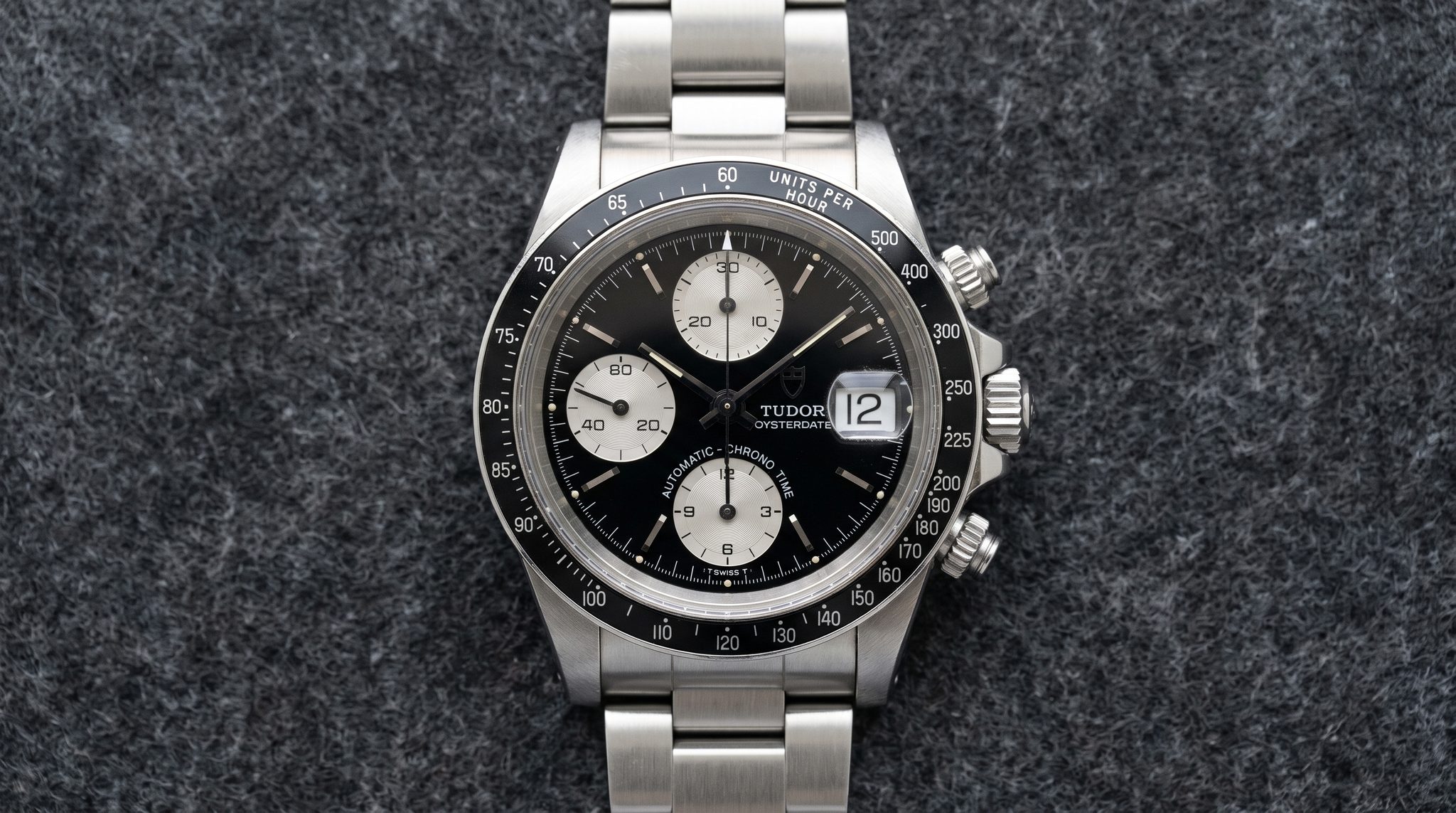
A Big Block of the final series: a thick, steel Tudor chronograph whose worth lies in how much of it is still the watch Tudor made.
- Production
- c. 1989–c. 1995
- Case
- Stainless steel, 40 mm
- Thickness
- ~14.2–15 mm
- Lug width
- 20 mm
- Bezel
- Black plastic tachymeter
- Crystal
- Acrylic
- Crown
- Screw-down, with pushers
- Dial
- Black or silver, date only
- Lume
- Tritium
- Movement
- Tudor 7750 (Valjoux-based)
- Power reserve
- ~42h
- Bracelet
- Oyster, Tudor-logo clasp
The Tudor Chronograph 79160 was produced from about 1989 to about 1995.
- Production years
- c. 1989–c. 1995
- Replaced
- 9420/0
- Movement
- Tudor 7750 (Valjoux-based)
The Tudor Chronograph 79160 belongs to the final Big Block series, and it is the one whose value depends most on how much of it is still the watch Tudor built. No production ledger fixes its dates: a Tudor-published example is dated 1989, dealers document watches from 1992 through 1995, and the end of the run is an approximation rather than a fact. What separates a good one from a tired one is therefore a handful of parts that wear or get replaced: a black plastic bezel insert that scratches and fades, a dial in one of two marker styles, and a case whose bevels soften under repeated polishing.
The 79100 series arrived in 1989 to replace the 9400 series, with changes the record describes as mostly aesthetic. The 79160 is the version with the black tachymeter bezel, standing beside the 79170 (black rotating 12-hour bezel) and the 79180 (steel tachymeter bezel). Inside is the Tudor-signed 7750, an automatic movement built on the Valjoux/ETA 7750 architecture rather than an in-house Tudor calibre. That automatic chronograph engine is the reason for the thick case that gives the Big Block its name. The watch measures 40 mm across with 20 mm lugs and about 48 mm lug-to-lug, yet stands roughly 14.2 to 15 mm tall, so it is compact on the wrist but unmistakably tall. The case and crown still carry Rolex signatures, while the bracelet clasp in this series carries the Tudor logo.
What it looks like in hand is a matter of small tells. The black bezel is glossy when fresh, but plastic ages, and crazing or fading is part of the charm when it is original. Tritium lume on the dial turns warm with age and should match the hands. Applied markers either slope toward their ends or sit straight. These details, more than the reference number, decide whether a given 79160 is a coherent survivor.
“No ledger says when the 79160 began or ended, so the reference number tells you little and the surviving original parts tell you everything.”
Tudor Chronograph 79160 production years: c. 1989–c. 1995
The Big Block's bulk is a consequence of its engine. In 1976 the automatic Valjoux 7750 replaced the manually wound Valjoux 234 in Tudor's chronographs, adding an hour totalizer and quick-set date, and the taller case of the 9400 series followed from housing an automatic movement. The 79100 series of 1989 kept that machine and changed the surface. Why Tudor made the change is not documented, though collector and dealer descriptions call the differences mostly aesthetic, and the reason the bracelet clasp began to carry the Tudor logo is likewise unrecorded.
Inside the 79160's own run, the dial is the clearest moving part. Collectors call the early dial Mk1: its applied markers have sloping ends and a painted frame surrounds the date window. The later Mk2 has straight markers and no frame. Tudor never published a serial boundary between them, so the early-to-mid 1990s placement is an inference from surviving watches rather than a record. The bezel moves on a separate clock: black aluminum inserts are generally placed after the original plastic, though that cutoff is not established, and fragile originals are often replaced regardless of the watch's age. Tritium dials marked T SWISS T also persist to about 1998, past the end of the 79160, so that marking dates nothing precisely.
Seen together, roughly two decades of Big Block history rest on one movement family and a short list of cosmetic edits. That is why each small difference carries so much weight, and why none of them can be treated as a reliable calendar.
- 1976Automatic Big BlockThree registers, thick case, 9400-series refs
- c. 198979100 series arrivesTudor-logo clasp; Tudor example dated 1989
- c. 1989Mk1 dialChamfered marker ends, framed date window
- 1992 – 1995Dated examples clusterSilver and albino dials among them
- c. 1990 – 1995Mk2 dialPlain date window, straight marker ends
- c. 1995Run endsSapphire-era 79260 follows as a new design
- c. 1996 – 2000T SWISS T fadesNo 79160 cutoff from this marking
79160 against its neighbours
The 9420/0 shows where the 79160 came from, and the 79170 and 79180 show how little separated it from its siblings: in this series the bezel is the principal difference.
9420/0 Predecessor c. 1976–1989 | 79180 Sibling, steel tachymeter bezel c. 1989–c. 1995 | 79170 Sibling, rotating 12-hour bezel c. 1989–c. 1995 | This reference 79160 Tudor · focal c. 1989–c. 1995 | |
|---|---|---|---|---|
| Production | c. 1976–1989 | c. 1989–c. 1995 | c. 1989–c. 1995 | c. 1989–c. 1995 |
| Case | Stainless steel | Stainless steel | Stainless steel | Stainless steel, 40 mm |
| Bezel | Fixed black tachymeter | Steel tachymeter | Black 12-hour rotating | Black plastic tachymeter |
| Movement | Valjoux 7750 | Valjoux 7750 | Valjoux 7750 | Tudor 7750 (Valjoux-based) |
Six bezel and dial variants across the run
The early dial has a sculpted look: applied hour markers with sloping, chamfered ends, a painted frame around the date window, and chronograph registers with a raised inner section that gives the face depth. OYSTERDATE sits below the date and AUTOMATIC–CHRONO TIME above the lower register. The dating window is approximate, and replacement or service dials can scramble the apparent chronology.
What to check before buying a 79160
The 79160 is risky because so little of its value is in the reference number: a genuine case can carry a replacement dial, bezel, bracelet or movement part, and the plastic bezel and soft case edges make wear easy to hide. Asking prices visible in 2026 run from roughly US$5,000 to 8,000 for ordinary examples to US$12,000 or more for rare or full-set watches, but these are asking figures, not completed sales. For someone who wants a vintage chronograph on a 40 mm wrist and does not mind 15 mm of height, a correct 79160 is a sturdy, wearable watch with a manual-style charm, and the right one rewards patience over a quick buy.
Tudor Chronograph 79160 price and value
A Tudor Chronograph 79160 sells for about $6,500 at the median, typically $4,400 to $6,900 across 14 comparable sales.
Tudor Chronograph 79160 for sale
Indicative figures from recent dealer, auction, and Grey Market sales (updated this week). Every watch is verified before it sells here.
Each point is a recent dealer or auction sale, banded to an indicative figure. The range shown is not a valuation.
Grey Market runs watch auctions for vintage and neo-vintage pieces, every lot reviewed before it lists and verified before the seller is paid, and the Watch Exchange, where ID-verified users buy and sell at a fixed price. Selling one? See the ways to sell a Tudor, or check what it’s worth. For more vintage Tudor, see the Tudor reference guide.
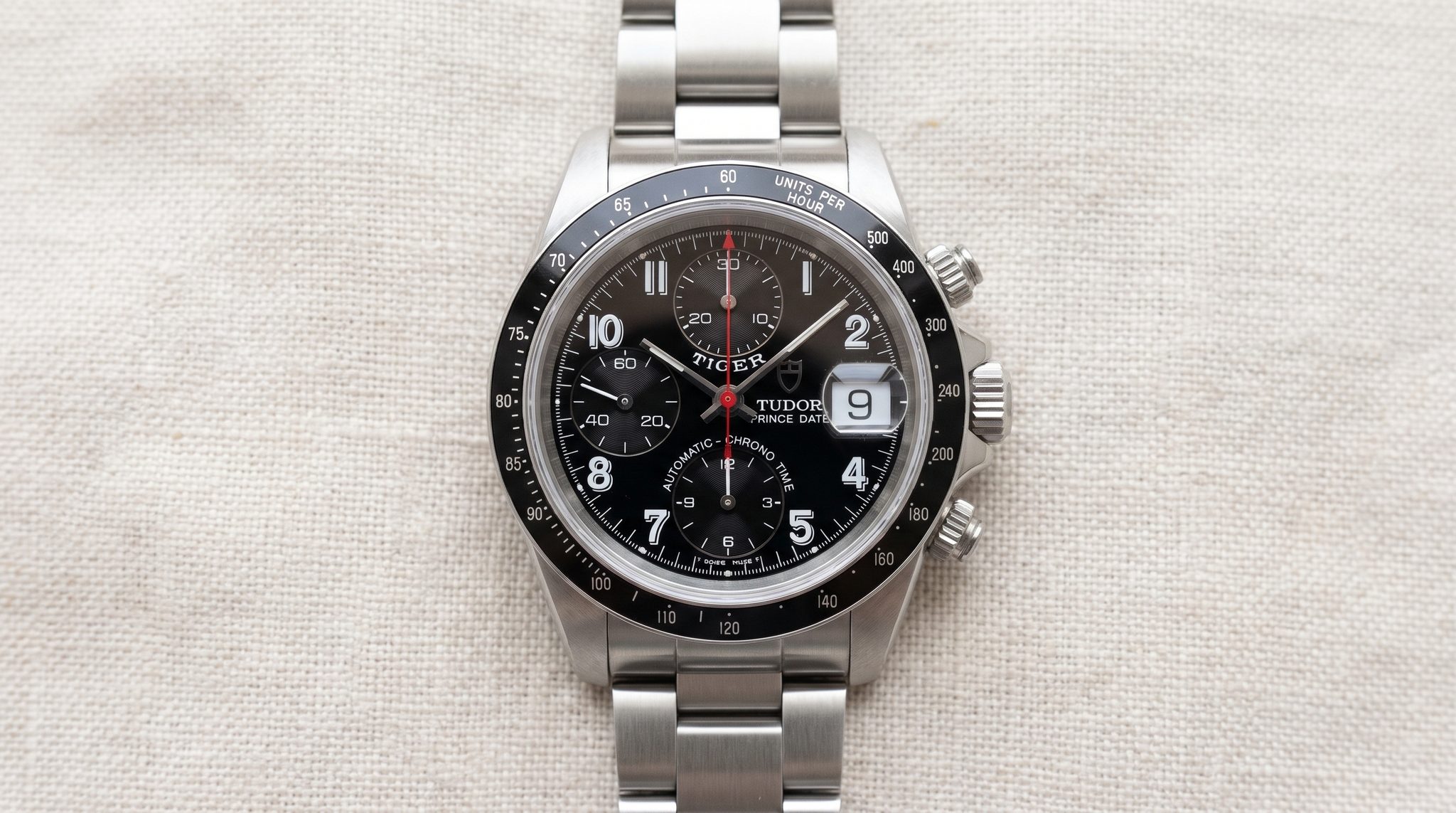
Adjacent in the Chronograph family
Common questions about the 79160
The Tudor Chronograph 79160 was produced from approximately 1989 to 1995. A Tudor-published example is dated 1989 and dealer records document watches from 1992 to 1995, but no production ledger fixes either end of the run. It replaced the 9400-series Big Blocks, and the later Prince Date chronographs such as the 79260 belong to a different design generation.
- A Unique Style: The chronographs, from 1976 to 1991tudorwatch.com
- Monaco, July 25, 2023 Auction, Important Modern & Vintage Timepiecescatalog.antiquorum.swiss
- Very Briefly: Tudor Chronographs (Vintage, Pricing)revolutionwatch.com
Show 7 more
- The Ultimate Guide to the Tudor 'Big Block'tudorcollector.com
- The Tudor Big Blockbulangandsons.com
- Tudor Oysterdate Prince 79160 Watches indexcollectorsquare.com
- Tudor Prince Oysterdate 79160 Stainless steel Silver 1994, Important Timepieces, Lot 1078everywatch.com
- 1994 Tudor Chronograph Big Block ref. 79160 Silver Dial with box and papersoedvintage.com
- Tudor 79160 reference overviewchrono24.com.au
- Tudor Big Block 79160 Oysterdate Albino Dial, 1992chrono24.co.uk