

Knowing when to sell is just as important as knowing how.
The Cost of Holding Too Long
Collectors love their watches. That emotional attachment is what makes the hobby meaningful—but it is also what makes selling so difficult. The result is that most sellers wait too long. They hold through the peak of a hype cycle, past the optimal window for a discontinued model, or simply let a watch sit unworn in a safe for years while its value quietly declines.
Recognizing the right moment to sell is not about being ruthless or treating your collection as a portfolio. It is about being honest with yourself about which watches still earn their place on your wrist and which have become dead capital that could fund something better.
1. The Safe Queen Test: You Haven't Worn It in Six Months
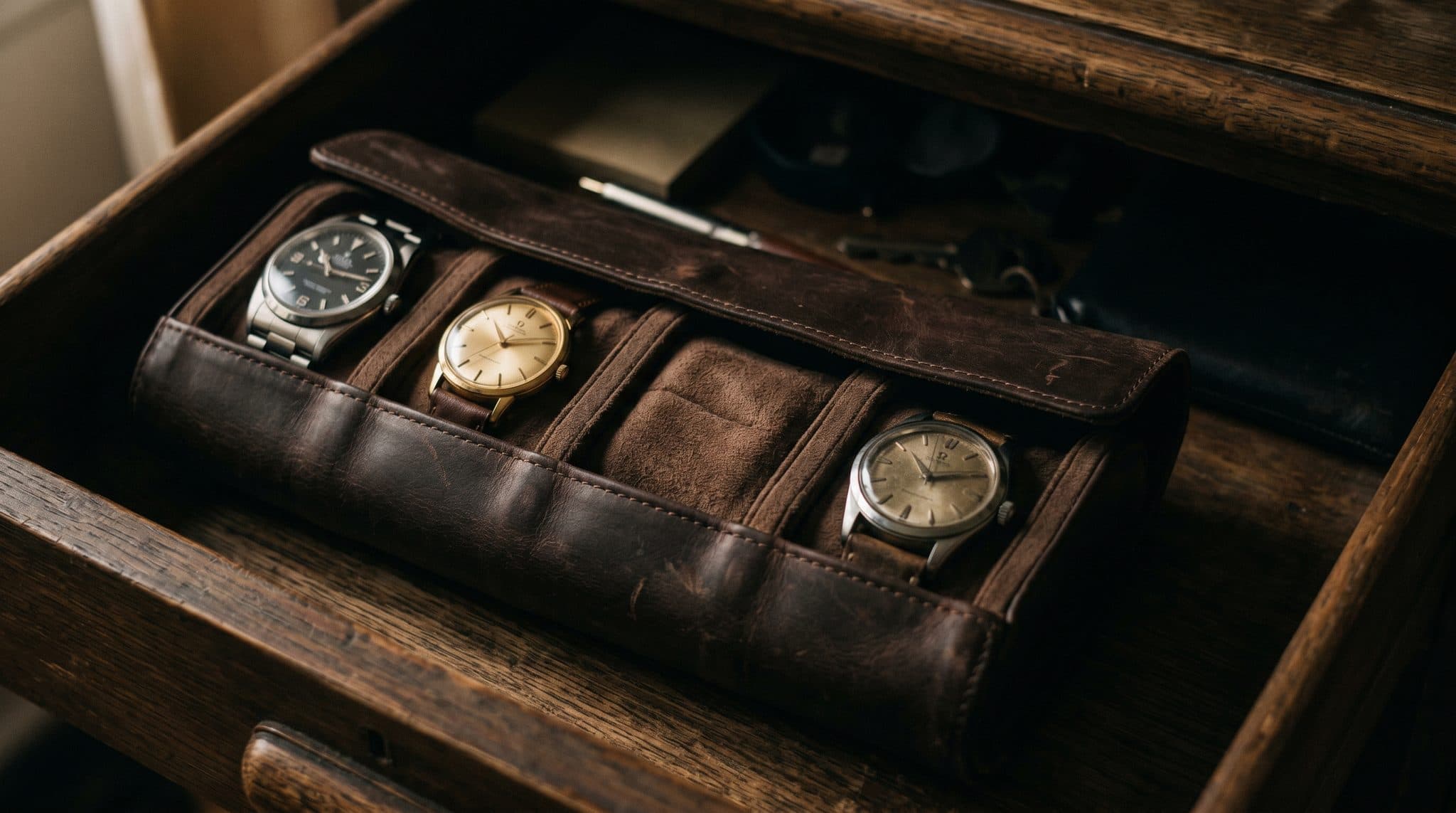
This is the most reliable signal, and it requires zero market analysis. Open your watch box and ask yourself a simple question: When did I last wear this?
If the answer is six months or more, the watch has effectively become a savings account that does not pay interest—and may actually be losing value. Mechanical watches need to be worn or at least wound periodically. A watch sitting in a safe is accumulating nothing except the opportunity cost of what you could do with the capital.
The six-month threshold is not arbitrary. It is roughly two full seasonal rotations—if a watch did not make it onto your wrist during either summer or winter, it is unlikely to suddenly become part of your regular rotation.
2. Peak Hype: The Market Is Running Hot
Watch markets run in cycles, and certain models experience intense hype periods driven by influencer attention, retail scarcity, or celebrity endorsement. When a watch's secondary market premium reaches its peak, selling into that demand is the optimal financial decision.
Signs of peak hype include: the watch is appearing in every YouTube roundup and Instagram grid; dealers are competing for inventory; secondary prices have risen 30 percent or more above retail within a short period; and you are seeing the watch recommended to people who have never bought a luxury timepiece before.
The difficulty is that peaks are only obvious in hindsight. A reasonable heuristic: if you find yourself thinking "I can't believe how much this is worth now," it is closer to the peak than the floor.
3. Collection Consolidation: Trading Up to a Grail
One of the healthiest reasons to sell is consolidation—liquidating two or three mid-tier pieces to fund a single watch you have always wanted. The one-in-one-out rule that many experienced collectors follow is a version of this philosophy.
Consolidation is especially powerful when your collection has grown beyond what you can realistically wear. If you own eight watches but only have five days in the work week (plus two weekend slots), at least one watch is mathematically redundant. Selling the least-worn piece to upgrade another slot is a net improvement in both collection quality and daily enjoyment.
Before you consolidate, make sure you understand which sales channel will maximize your return—the difference between a dealer offer and an auction result could fund an extra strap or a service for your grail piece.
4. Model Discontinuation or Update
When a brand announces that a model is being discontinued or updated, secondary market prices respond immediately—but the direction depends on the specific situation.
Discontinuations of beloved references (like the Rolex "Hulk" Submariner 116610LV) tend to cause an initial spike as collectors rush to secure the outgoing model. If you own one and are willing to sell, the window immediately after the announcement is typically the strongest.
Model updates, on the other hand, can depress prices for the outgoing generation—especially if the new version is widely seen as superior. In this case, selling before the official announcement (if you can read the signals) or immediately after, before prices fully adjust, is the right move.
The key insight: brand announcements create volatility, and volatility creates opportunity for sellers who are paying attention and prepared to act. Having your listing photos ready in advance means you can move within days of an announcement rather than weeks.
5. Significant Appreciation: Locking In Your Return
If your watch has appreciated 30 percent or more since you purchased it, you are sitting on a meaningful gain. The question becomes: do you expect it to continue appreciating, or is this a good time to realize the profit?
Most watches are not investment assets. They are consumer goods that occasionally appreciate due to scarcity, hype, or historical significance. Unlike stocks, watches require insurance, servicing, and careful storage. A 30 percent gain on a watch you are no longer wearing is a strong outcome—and there is no shame in taking it.
Consider this framing: if someone handed you the cash equivalent of your watch's current market value, would you immediately use it to buy the same watch again? If the answer is no, you should probably sell.
What to Do Once You've Decided
Once you recognize one or more of these signals, the next step is preparation—not hesitation. Photograph your watch properly, write a listing that converts, choose the right sales channel, and read our Ultimate Guide to Selling Your Luxury Watch Online for the complete playbook.
When you are ready, sell your watch on Grey Market. Selling a specific brand? There is a page for each: sell a Rolex, an Omega, a Cartier or a Patek Philippe.