

Omega Seamaster
The Omega Seamaster is the sports-watch line that split into two modern diver languages, one made to stay recognisable for years, the other built to advertise platform change.
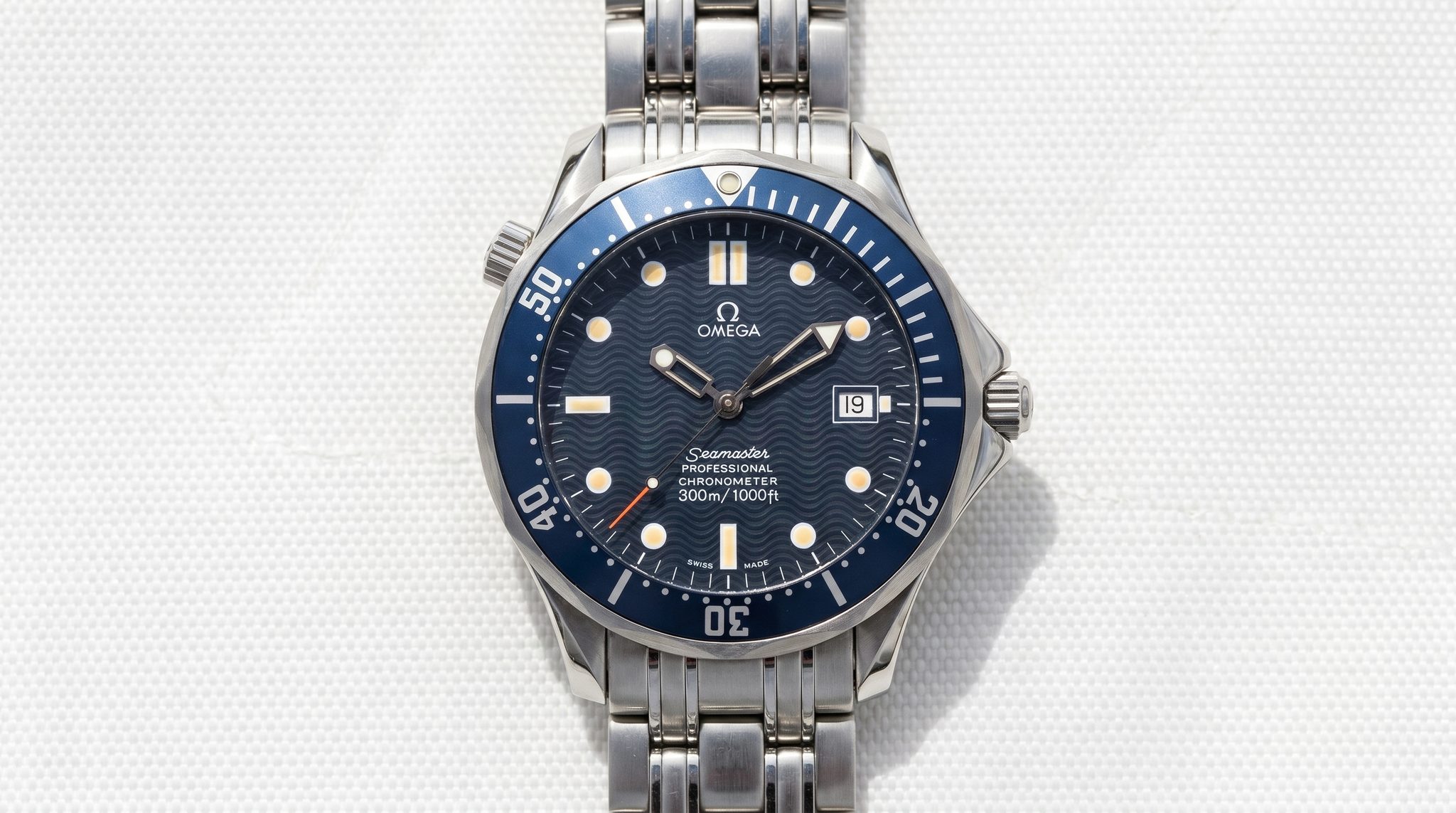
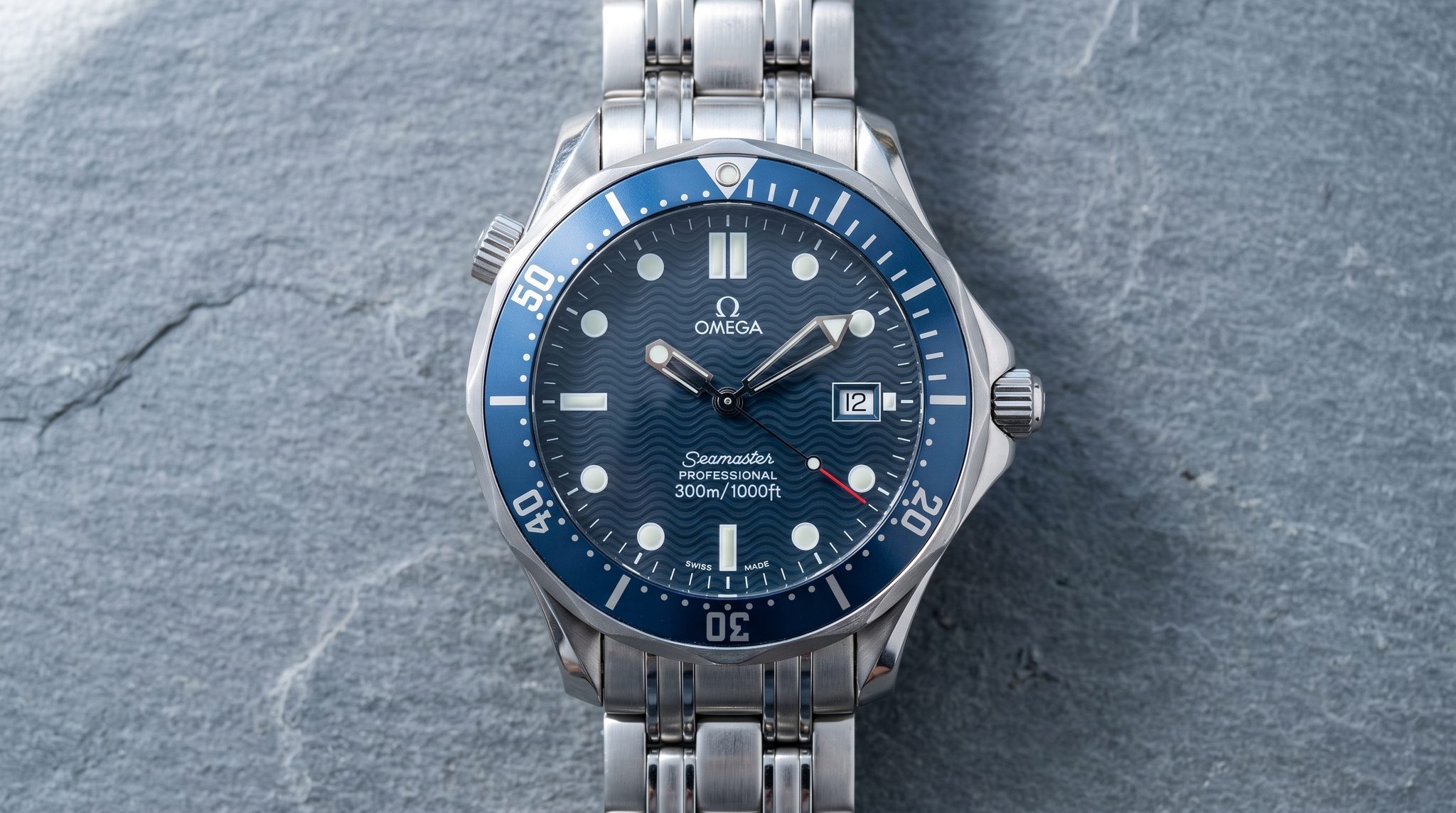
The Omega Seamaster, as seen through these modern Diver 300M and Planet Ocean references, is Omega’s clearest case study in two opposite ways to build a “diver identity”: keep the outside nearly fixed so tiny details become the timeline, or change the platform so the generation announces itself. In 1995, that first approach became visible to the general public when a quartz Seamaster Diver 300M, the 2541.80.00, appeared on screen in GoldenEye, locking a blue wave dial, blue bezel, and helium valve at 10 o’clock into pop culture.
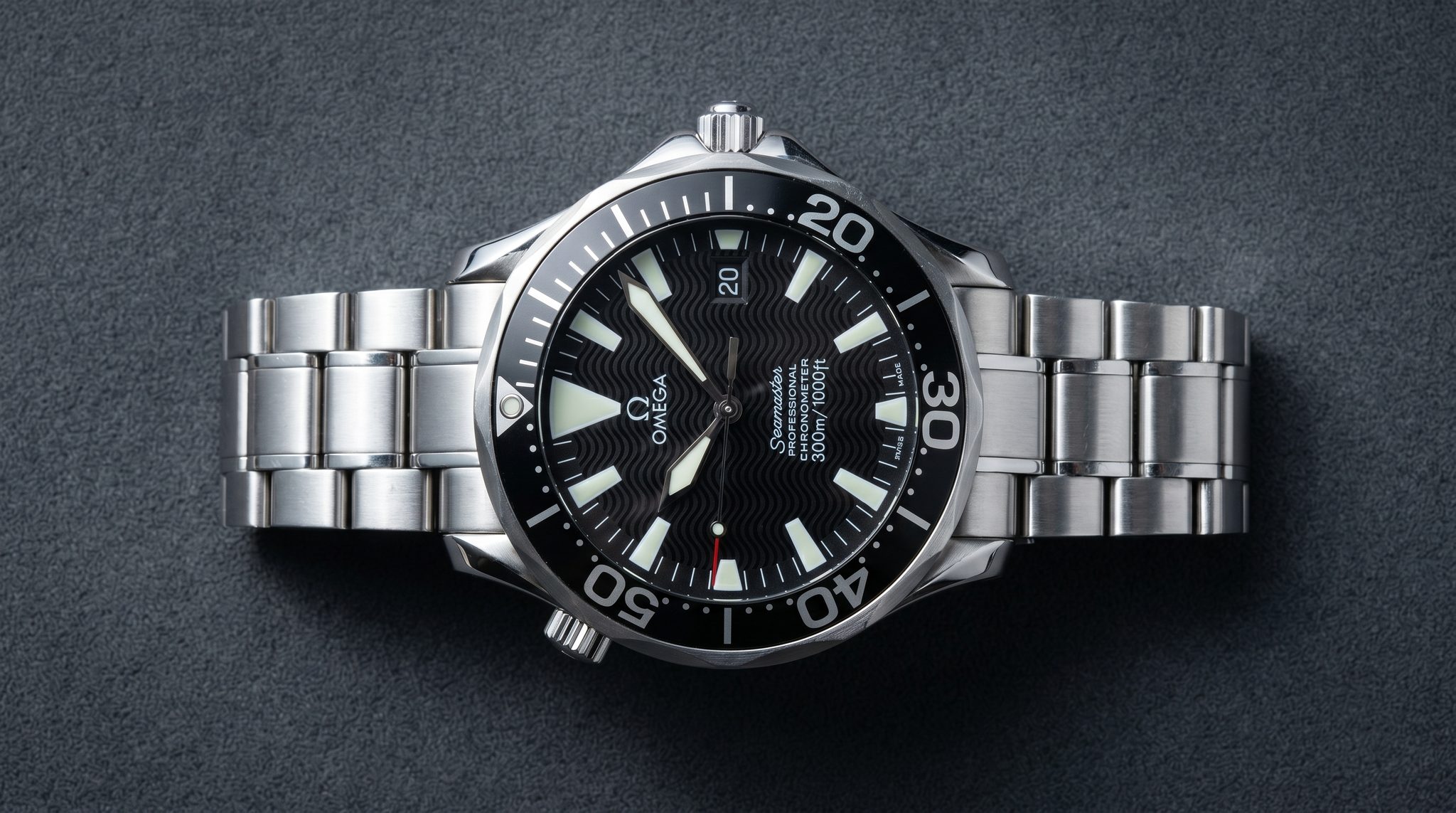
That on-screen baseline helps explain why the Diver 300M trio here reads like a single silhouette with three personalities. The wave-dial pair 2531.80.00 (automatic) and 2541.80.00 (quartz) are repeatedly described as running for years with few visible changes, so collectors and writers lean on broad era markers like the late-1990s transition away from tritium lume, plus the basic mechanical split between Cal. 1120 and Cal. 1538. The 2254.50.00 keeps the same underlying Diver 300M architecture but flips the legibility cues, trading the wave pattern and skeleton hands for a flat black dial and sword hands from 2000 onward.
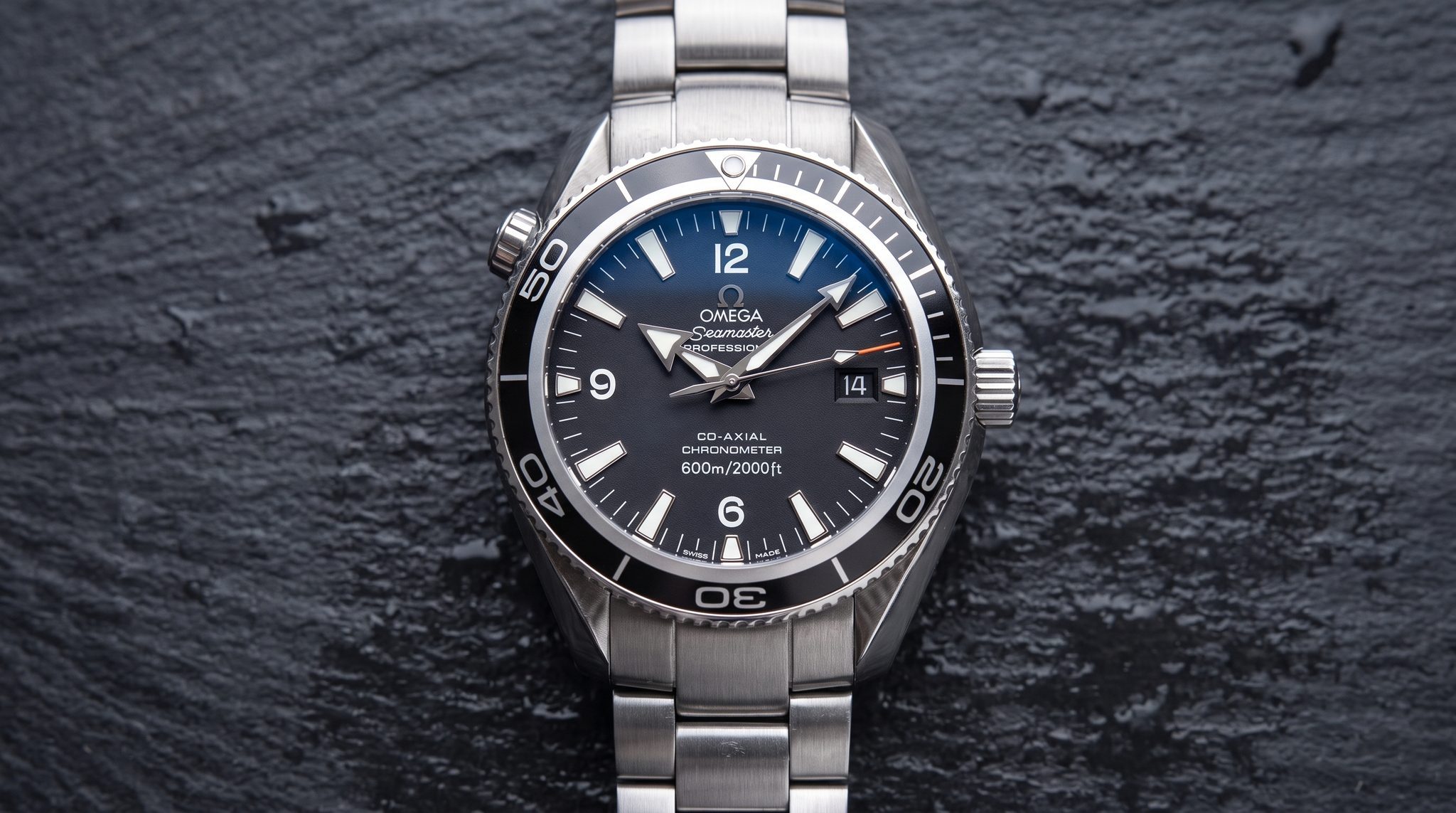
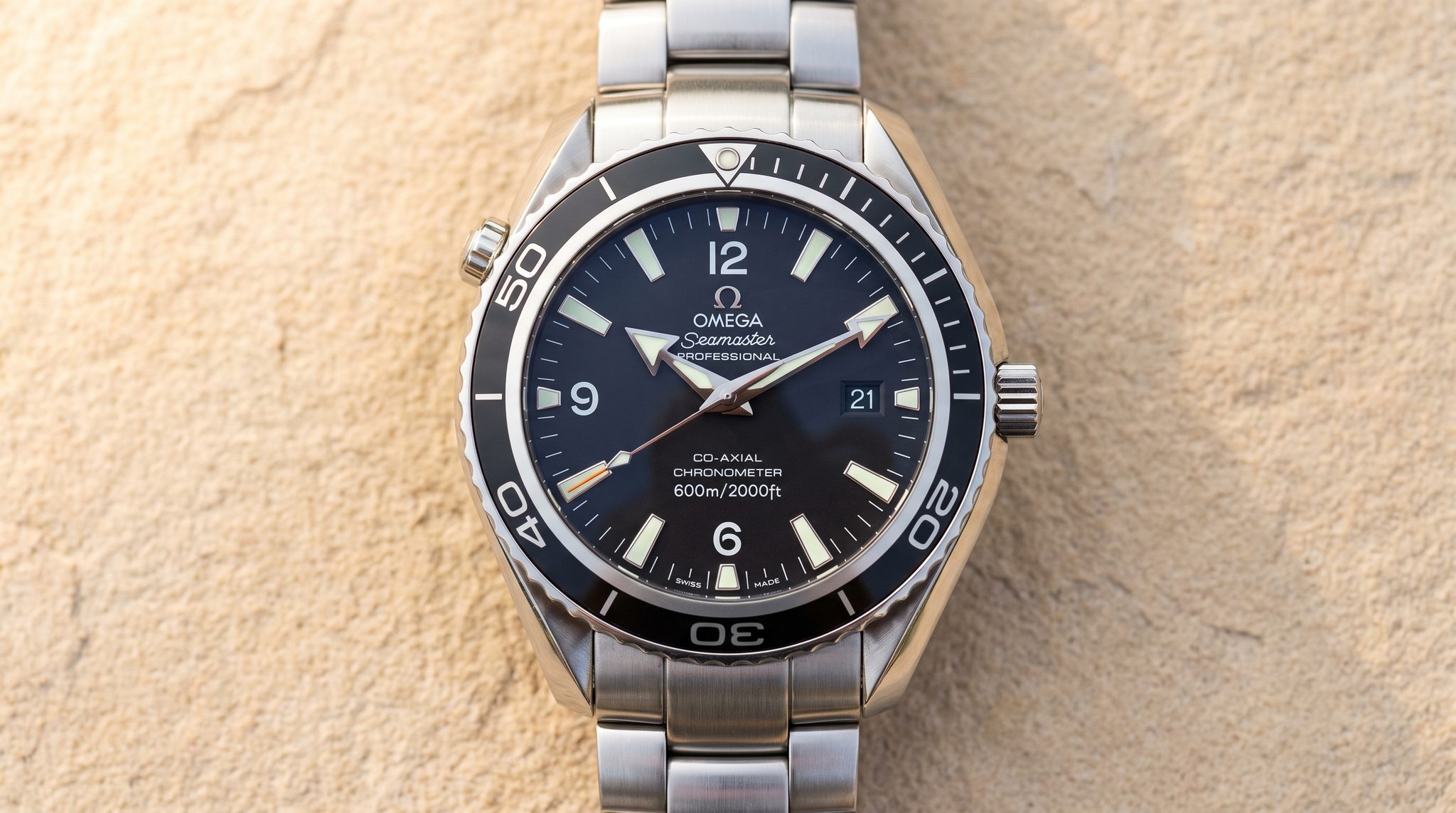
The Planet Ocean references tell the opposite story. In the first-generation Planet Ocean pair 2201.50.00 and 2200.50.00, the line is framed around a 600 m rating and Omega’s early Co‑Axial Cal. 2500. Then 232.30.42.21.01.003 places the second-generation idea in plain view: it pairs the same 600 m class with a display back and is tied in Planet Ocean histories to the Cal. 8500 family, a shift often framed as Omega moving from ETA-derived co‑axial foundations (2500) to an in-house-style architecture. Market documentation for this era also commonly describes the bezel insert as ceramic, a material step that, like the movement family, is used to separate generations.
Zoomed out, the Seamaster vs other modern divers is not only a contest of water-resistance numbers. It is a lesson in how a brand can make time visible, either by repeating a recognisable Diver 300M face long enough that the smallest period cues matter, or by letting the Planet Ocean advertise its era through platform and material changes.
For readers searching vintage Omega Seamaster context, the broader Seamaster history begins in 1948 as a civilian, water-resistant everyday watch positioned for “town, sea and country.” These six pages focus on the much later Diver 300M and Planet Ocean branches of that larger family.
What each Seamaster reference trades for
Median and typical range of recent dealer, auction and Grey Market sales, banded. Indicative, not a valuation; each reference page carries the detail.
6 references across 3 eras
Bond-era Diver 300M
This generation is defined by continuity: the Diver 300M look that most people can sketch from memory was kept stable long enough that it became a dated artifact almost by accident. 2531.80.00 and 2541.80.00 share the same recognizable package in steel, with the blue wave dial, blue aluminium bezel, and helium escape valve at 10, made culturally specific by the 1995 GoldenEye appearance of the quartz 2541.80.00. 2254.50.00 stays on the same Diver 300M platform but pivots to a no-wave black dial and sword hands from 2000, prioritizing legibility over the Bond wave-and-skeleton-hand look. The era ends as the line transitions into the co‑axial successor generation in the mid‑2000s.
First Planet Ocean 2500
The first Planet Ocean generation is the Seamaster branch that defines itself by headline capability rather than a single dial motif. Both 2201.50.00 (42 mm) and 2200.50.00 (45.5 mm) are presented as 600 m steel divers built around the Co‑Axial Cal. 2500, and Planet Ocean histories frame this period as Omega’s early, wide deployment of co‑axial movements in a more “professional” diver tier. Compared with the Diver 300M’s long-running exterior identity, the Planet Ocean differentiates itself through size choice and the movement platform, with secondary-market descriptions using those anchors more than micro-eras of dial text. This era gives way around 2011 as the Planet Ocean line shifts to the 8500 movement family and more modern bezel materials in the next generation.
8500 Planet Ocean
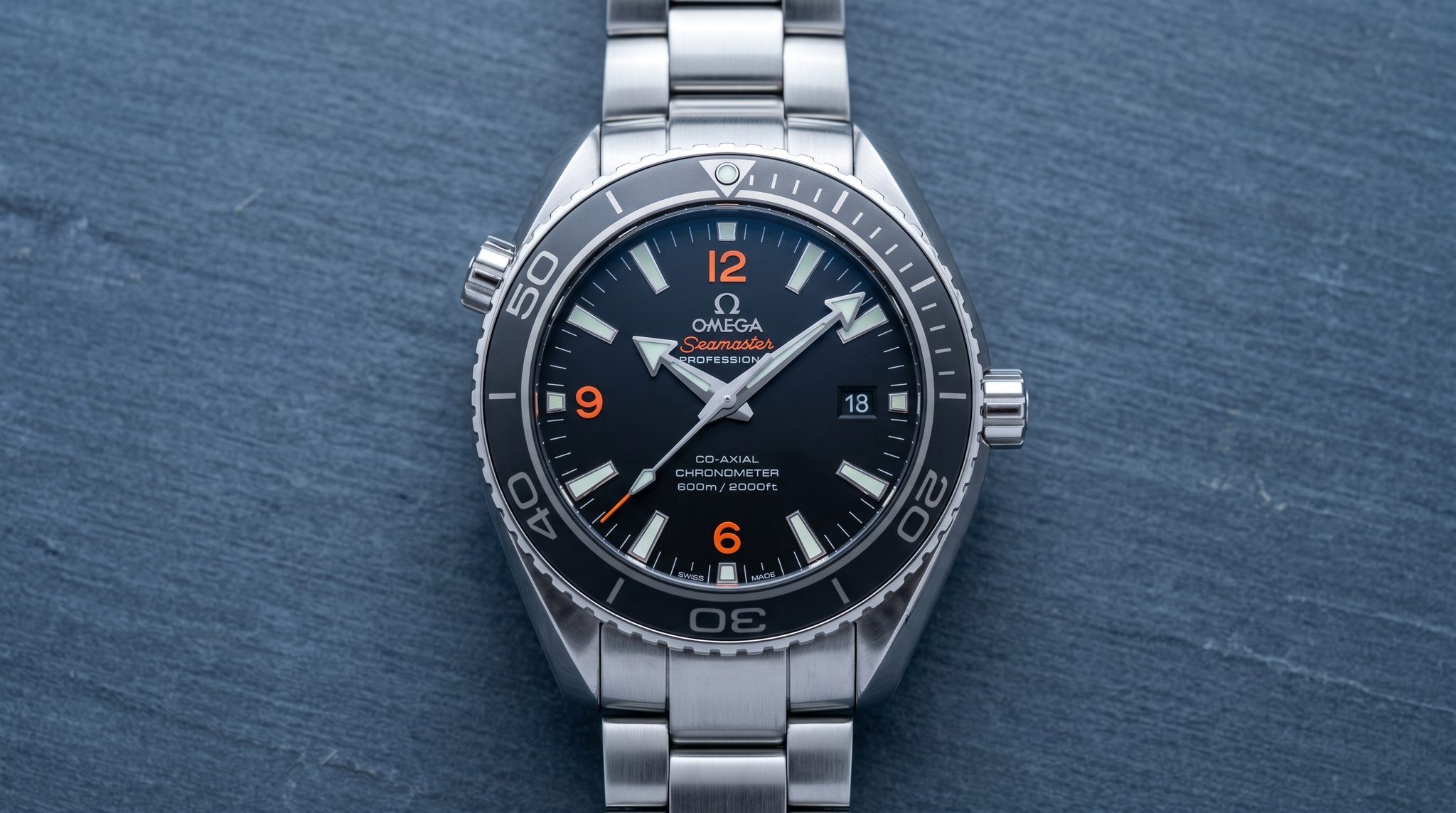
This generation is defined by a platform change that is meant to be seen. 232.30.42.21.01.003 keeps the Planet Ocean idea of a 600 m steel diver but ties it to Omega’s Cal. 8500 and pairs that depth rating with a display back, a combination repeatedly associated with the second-generation Planet Ocean era. In Planet Ocean overviews, the 2500-to-8500 shift is often framed as Omega moving from ETA-derived co‑axials to an in-house-style architecture, and market documentation for this era commonly describes the bezel insert as ceramic, reinforcing the sense of a new materials platform. The period ends not with a single documented discontinuation year for this reference, but with the later-2010s handoff to subsequent Planet Ocean families.
Which Seamaster to buy
Start by deciding which Seamaster language you want to live with. The Diver 300M era here is the “fixed face” branch: the watch reads the same across years, so the big decision is mechanical feel and the specific expression of the familiar case. If the Bond silhouette is the goal, the choice is largely between automatic 2531.80.00 and quartz 2541.80.00, two siblings that share the same visual baseline while differing fundamentally in movement and how ownership feels day to day. If the same platform with a more utilitarian dial is the point, 2254.50.00 is the Diver 300M variant that signals itself by what it removes, the wave texture and skeleton hands.
The Planet Ocean branch is the “platform tells time” approach. Choose 2201.50.00 or 2200.50.00 if the appeal is the first-generation Co‑Axial Cal. 2500 era and a size decision between 42 mm and 45.5 mm. Choose 232.30.42.21.01.003 if you specifically want the later platform, tied to Cal. 8500 and the generation commonly described with a ceramic-style bezel insert and a display back.
What to check on any Seamaster
Buying across these Seamasters is less about one universal checklist and more about understanding what tends to be replaced, then deciding what replacement is acceptable for the kind of Seamaster you want. Across the family, consumable service parts like crowns, crystals, and seals are commonly replaced, while visible components such as dials, hands, and bezel parts are the ones that most often turn a correct watch into a compromised one. The other family-wide issue is construction integrity: Seamaster fakes, frankens, and heavily altered watches often look plausible until the dial text, hands, and movement are checked against the exact reference identity.
Common questions about the Seamaster
In the references covered here, the Diver 300M is the branch built around a stable, instantly recognisable silhouette that ran for years with minimal external change, notably in 2531.80.00 and 2541.80.00. The Planet Ocean is separated more by platform steps, especially the Cal. 2500 first generation (2201.50.00, 2200.50.00) versus the Cal. 8500 era (232.30.42.21.01.003), plus bezel materials commonly described as moving toward ceramic-style inserts.
- 1948: Creation of the Seamasteromegawatches.com
- The Seamaster at 70omegawatches.com
- Omega Seamaster 300 (James Bond) 2531.80.00, Omega vintage database entryomegawatches.com
Show 7 more
- O M E G A Seamaster 300M Diver Magazine (Fratello x Omega PDF)fratellowatches.com
- Omega Seamaster Planet Ocean collection history (2005–2025)monochrome-watches.com
- Omega and James Bond historythedialatlas.com
- Omega Seamaster Planet Ocean watch family lineagethedialatlas.com
- Seamaster FAQchronocentric.com
- The Sleeper Watch, Omega Seamaster 300M 2531.80fratellowatches.com
- GoldenEye Watch, Omega Seamaster Ref. 2541.80gearmoose.com